

This Was Running on a Normal Hosting Account
Your website isn’t the only thing being hosted
We shut down a phishing operation this week. Not a fake page or a quick scam, a full system running on a standard hosting account.
The account signed up, passed payment checks, and deployed everything within minutes.
No exploit, no breach, just a normal user abusing normal infrastructure.
What was actually running
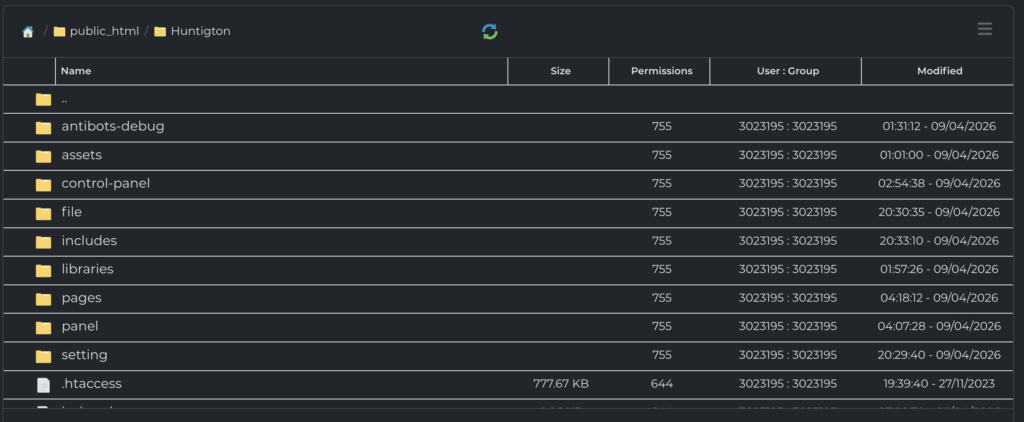
What they uploaded wasn’t simple.
It included anti-bot cloaking to hide from scanners and search engines, fake verification pages to filter real users, and a live admin dashboard. Every submission triggered Telegram alerts, and the entire flow was built to collect data step by step.
This wasn’t passive. It was interactive.
A live, controlled attack
Every visitor was tracked individually and given their own session.
The attacker could see when someone landed, view their IP, device, and location, and watch data being entered in real time. From the dashboard, they controlled what the victim saw next.
There were buttons for email login, phone number, OTP codes, ID upload, and card details.
There were also error states. If a victim entered something incorrectly, they could be pushed back and made to try again.
Someone was actively guiding the process.
What data was being collected
This wasn’t surface-level data.
The system captured usernames and passwords, email credentials, phone numbers, one-time passcodes, full card details, CVV, and even ATM PINs.
Everything was sent instantly to Telegram.
How it stayed accessible
One detail stood out.
The system wasn’t just accessible through the main domain. It was also being accessed through the temporary URL created alongside the hosting account.
That meant the phishing flow could still run, even if the primary domain wasn’t in use.
In practice, it gave the attacker a second route to keep the operation live.
What the logs revealed
Server logs showed the victim pages constantly polling background endpoints every few seconds.
They weren’t just loading a page. They were waiting for instructions.
That confirms it. This wasn’t a static phishing page. It was a live system responding in real time, based on what the operator chose to do next.
How it got there
This is the part most people get wrong.
There was no vulnerability. No hack. No clever exploit.
Just:
- a domain
- a valid payment
- files uploaded immediately after signup
From account creation to fully operational in minutes.
What we did
We suspended the account, removed access, preserved evidence, refunded the payment, and flagged the activity.
The real takeaway
Most people still think phishing is obvious.
A dodgy email. A bad-looking login page.
That’s not what this was.
This was controlled, selective, and manual. Someone on the other end watching, reacting, and guiding victims step by step.
Hosting isn’t just where your website lives.
It’s infrastructure.
And without proper management, monitoring, and controls, it can be used for things you won’t see until it’s already happening.
Need help managing your hosting properly?
If your site feels slow, unreliable, or you’re not confident in how it’s being managed, it’s worth fixing before it becomes a problem.
That’s exactly what we do at Viking Hosting.
Our website care plans cover updates, security, monitoring, and ongoing support so issues like this don’t slip through unnoticed.